


The Fight for Food Transparancy

Health vs Convenience and Profits
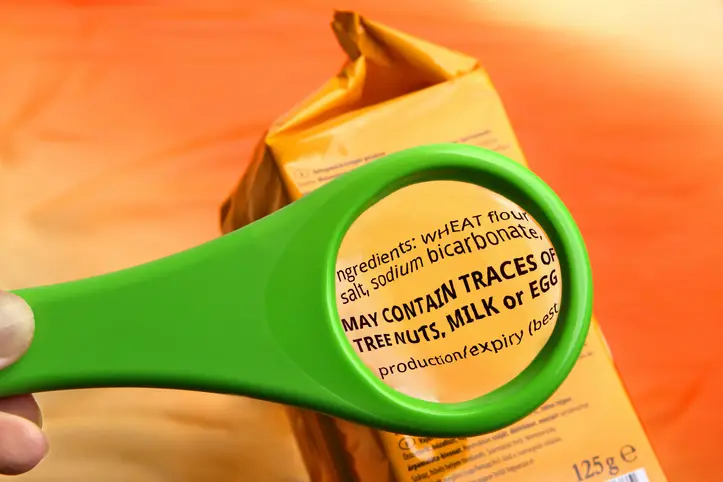
There are a growing number of us who are joining the fight for food transparency, but what does this mean? What is food transparency? When it comes right down to it food transparency is about knowing what we are eating, how it was made and where it originated.
The best choice of food is food that don’t need labels at all. They are sourced on organic (a term we shouldn’t have to use) local farms and sea and you you know what they are by looking at them! The ingredients don't require a dictionary. It is interesting to think that food labeling has become so critical because of the minefield of bad food choices in our stores. As a society we have sacrificed health over convenience.
Imagine the complete confusion someone from a generation or two ago would have even trying to comprehend why we would need to scan some strange label on food to understand what is in it and where it came from! Yet, here we are today having to do exactly that.
The Promise and the Failure
In the modern globalized food system, the distance between the farm and the fork has never been greater. At the heart of this system lies the humble barcode—a technology that theoretically acts as a digital passport for every food item. Global standards set by GS1 (specifically the GTIN) are designed to ensure every product is uniquely identified and tracked.
However, GS1 operates as a standards body, not a regulator. Their own 2025 Data Quality Framework [1] admits that "data integrity" remains the greatest barrier to a safe supply chain. When barcodes are mismanaged, duplicated, or linked to obsolete databases, the traceability chain collapses. The National Agricultural Traceability Strategy (2023–2028) [2] highlights that a lack of "interoperability" between retailer databases prevents a rapid national response to food safety risks.
The Retail Accountability Gap
Research into Australia’s largest retail food stores reveals a troubling trend: a lack of responsibility toward digital information accuracy. Speed-to-market and marketing tactics often take precedence over data integrity and food transparency. The imperative using packaging to get sales trumps the space needed for easy to read information.
A 2025 Food Standards Australia New Zealand (FSANZ) [3] investigation revealed a significant "transparency gap." While physical labels are strictly regulated, there is currently no consistent policy mandate requiring retailers to provide the same level of granular allergen or origin information on their digital storefronts. Manufacturers frequently prioritize marketing aesthetics over the consumer’s "Right to Know," leaving users to scan supplemental QR codes that lead to "404 errors" or generic brand landing pages.
Digital Discrimination: Eyesight, Allergens, and Diets
The failure of barcode data is not just a universal inconvenience; it is a specific form of discrimination against vulnerable user groups.
The Visually Impaired: For the 450,000+ Australians living with vision impairment, digital transparency is a safety requirement. Screen readers rely on structured data—often delivered via GS1 Digital Link [1]—to "read" a product’s contents. When companies fail to provide accurate digital records, they effectively blind the consumer at the point of purchase, violating the spirit of the Disability Discrimination Act 1992.
The Allergen "Russian Roulette": For those with life-threatening allergies, a barcode scan is a final safety check. Research from The Allergen Bureau (2024) [4] found that 56% of allergic consumers have suffered reactions due to inadequate digital or physical labeling. When seasonal packaging changes ingredients but the barcode record remains static, the consumer is left at risk.
Dietary and Religious Exclusion: Consumers following Halal, Kosher, Vegan, or Coeliac diets require 100% certainty. A 2025 study on "Inappropriate Communication" [5] noted that a lack of digital harmonization causes significant "food anxiety," effectively excluding these groups from safely participating in the retail market.

Strengthening the Legislative Framework
The current systemic deadlock exists because digital product data is treated as a "value-add" rather than a legal requirement. To resolve this, we believe that four legislative shifts are required:
- Legal Parity: Digital product data must be held to the same legal standard as physical packaging.
- Mandatory Standards: Transition from voluntary participation to a mandatory National Product Data Standard for real-time, verified ingredient sharing.
- Inclusion by Design: Update the Disability Discrimination Act to mandate "Point-of-Sale Digital Accessibility," ensuring barcodes provide WCAG-compliant text summaries.
- Data Auditing: Implement third-party Data Integrity Audits to spot-check barcode accuracy against physical shelf stock.
"Everyone has the right to easily know the ingredients and origins of foods. Extending this, we also have a right to easily know what an ingredient is and how it was manufactured. This fundamental right of food transparency is routinely side-lined where it is against the interests of food retailers and the food supply chain."

Bridging the Gap with the Natural Yield Food Scanner App & Food Scouts
Until the digital record is held to the same legal standard as the printed label (which also needs a lot of improvement), the gap remains. This is why Natural Yield has invested significantly in building the Natural Yield Food Scanner platform. Our goal? To increase the level of food transparency for everyone.
Recognizing that existing retailer databases, websites and physical shops are flawed and leave people at a disadvantage, Natural Yield is building an independent platform where food information is maintained.
Our Food Scouts scan and verify thousands of products, linking barcodes to comprehensive, human-verified ingredient and origin data. Anyone can join the Food Scout program through the Food Scanner app. We are not just providing an app; we are building a stop-gap measure for a broken regulatory system—empowering consumers with the truth that the current system denies them.
Interested in being a beta tester for the Food Scanner App? Go to the Natural Yield Food Scanner page to register.
Glossary of References
[1] GS1 Australia (2025). Advisory Services Insight: The Importance of Data Quality & Ambition 2027.
[2] DAFF (2023). National Agricultural Traceability Strategy: Implementation Plan 2023-2028.
[3] Food Regulation Standing Committee (July 2025). Information for Food Sold Online: Understanding and Defining the Problem.
[4] The Allergen Bureau (2024). Using ‘Next-generation Barcodes’ to Improve Allergen Labelling: A Consumer Survey.
[5] Journal of Food Safety & Consumer Protection (2025). Digital Discrimination: The Impact of Unreliable Product Data on Vulnerable Groups.
[6] Australian Human Rights Commission (2025). Report on Digital Accessibility and Consumer Rights in Retail.
